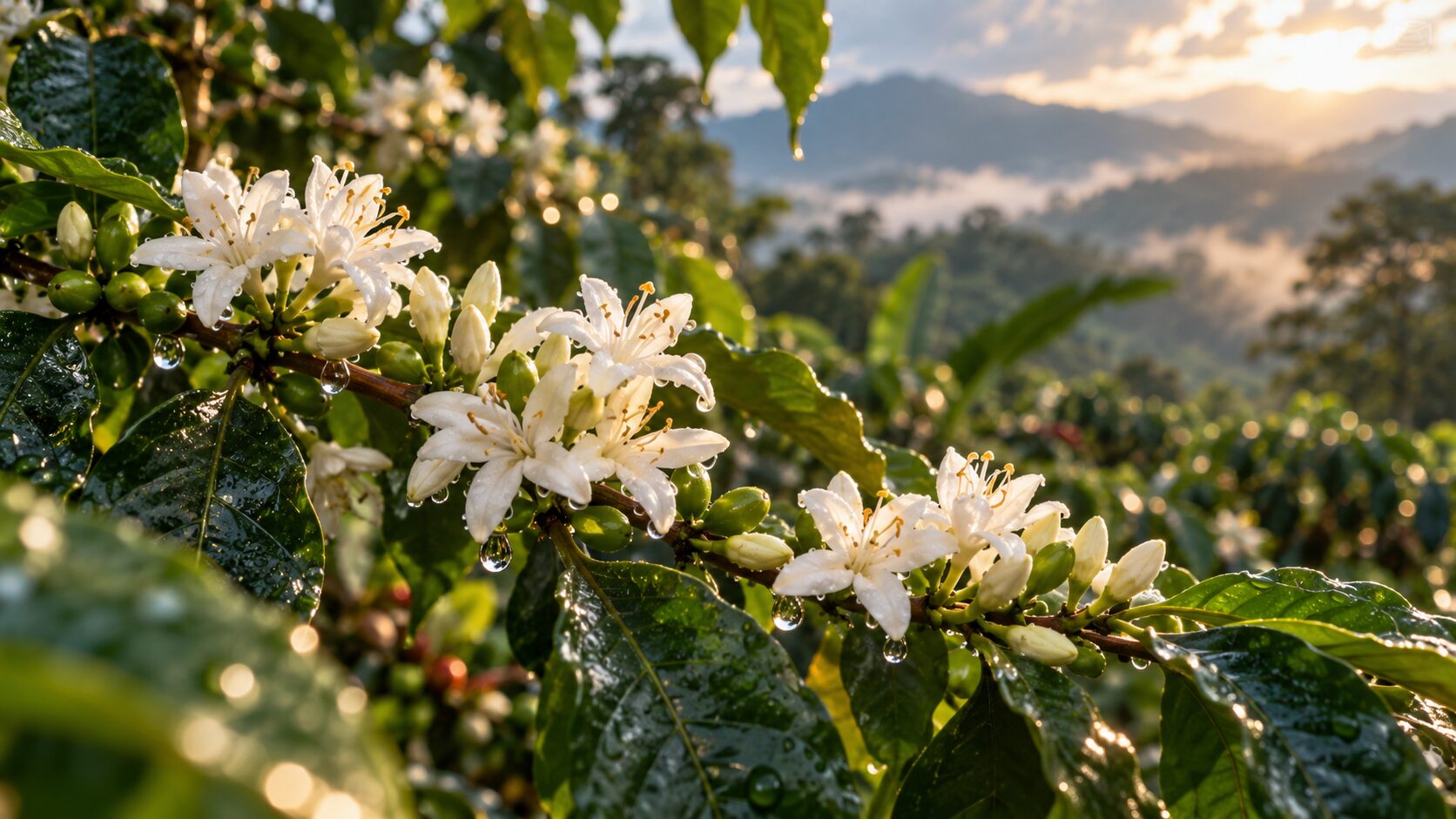
Rain wakes the tree
After a dry spell, rainfall can trigger a burst of white, jasmine-scented flowers.
 Let's Talk

A ribbon around the world
Why do the world’s great coffee regions gather near the equator? Because coffee is wonderfully particular about where it calls home.
Roughly 25° north to 30° south
The Coffee Belt wraps through Latin America, Africa, and Asia-Pacific. Inside it, frost is rare, sunlight is generous, and wet and dry seasons give coffee trees a dependable rhythm: rain wakes the flowers, fruit slowly forms, then a drier window helps farmers pick and dry the crop.
Latitude opens the door. Elevation changes the conversation. Higher arabica farms are cooler, so cherries often ripen more slowly and have more time to develop sugars and complexity. Lower, warmer farms favor resilient robusta, whose deep body and intensity power espresso, instant coffee, and beloved local traditions.
After a dry spell, rainfall can trigger a burst of white, jasmine-scented flowers.
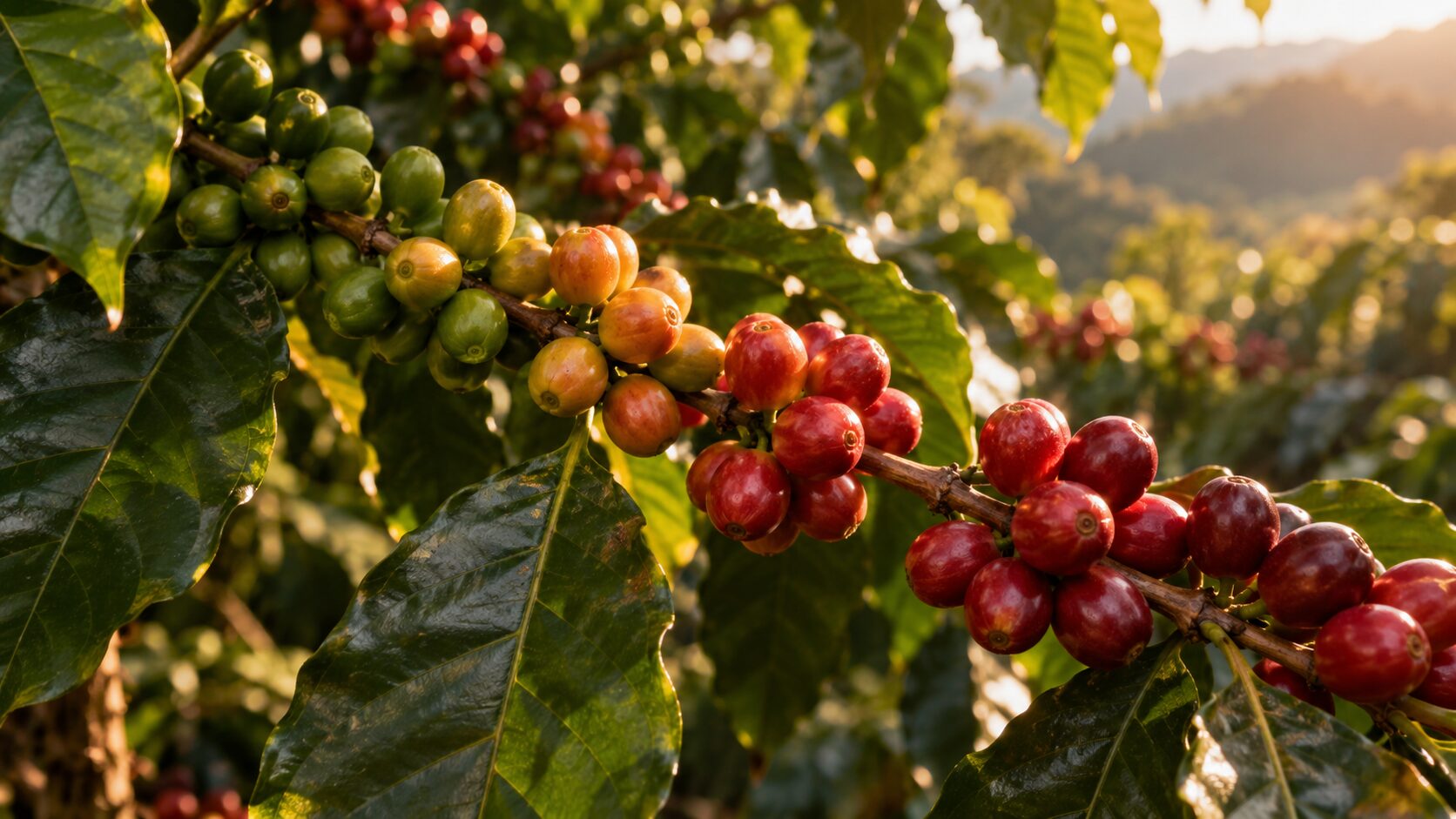
Green fruit matures for months, gathering sweetness from sun, soil, altitude, and variety.
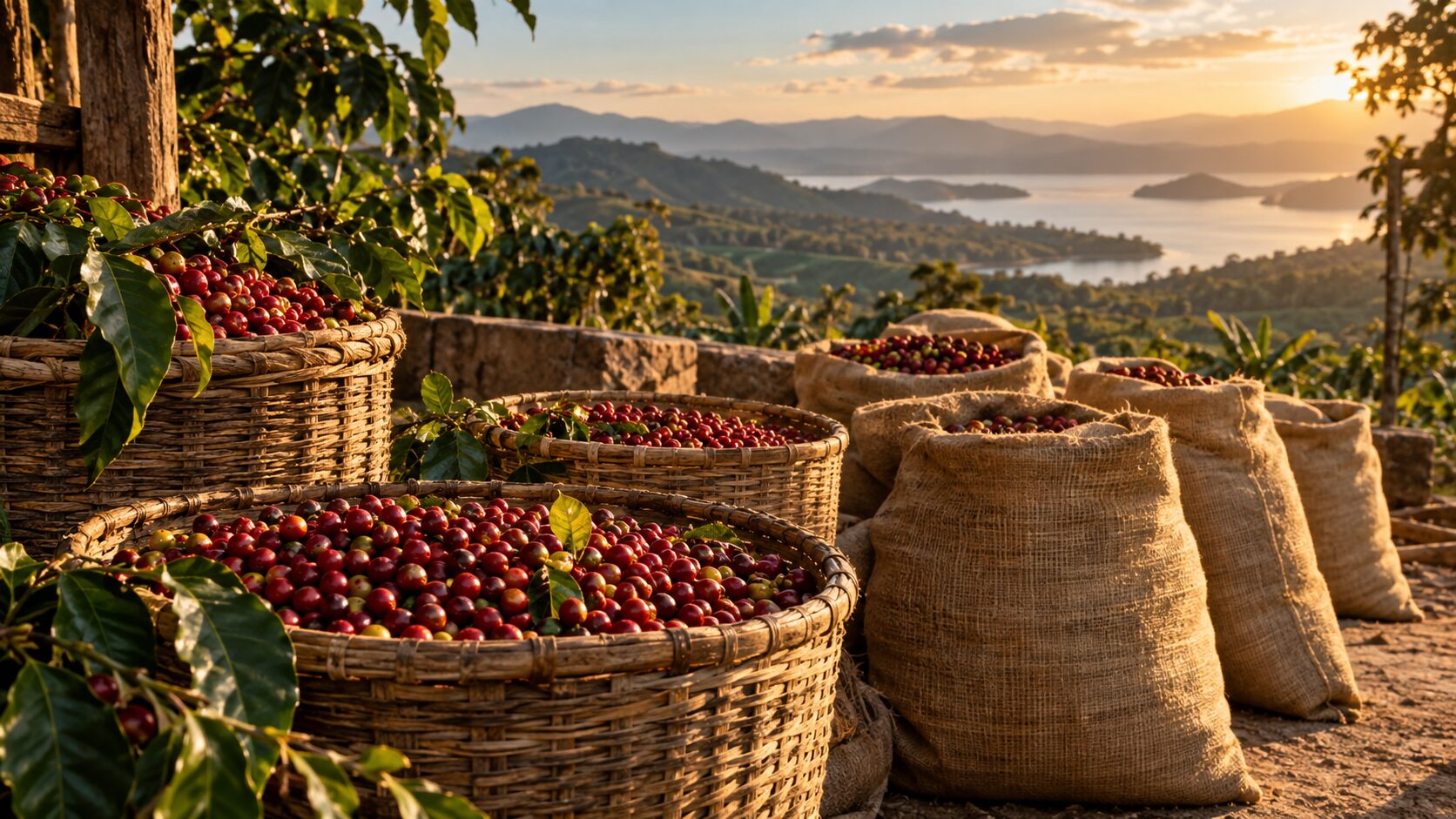
As one country finishes picking, another begins. Fresh crop coffee moves around the globe all year.
Choose an origin
Open a country to walk its farms, follow its harvest, meet its processing traditions, and discover how its flavor traveled into cafés around the world.
Caramel · Chocolate · Citrus
Enter the region →Nutty · Chocolate · Smooth
Enter the region →Cocoa · Citrus · Smooth
Enter the region →Honey · Citrus · Clean
Enter the region →Mild · Sweet · Balanced
Enter the region →Floral · Citrus · Berry
Enter the region →Winey · Spice · Complex
Enter the region →Spice · Cocoa · Full-bodied
Enter the region →Bold · Cocoa · Full-bodied
Enter the region →Earthy · Cedar · Spiced
Enter the region →Climate, harvest, and flavor vary by farm and season.
Back to Coffee With Krissy