Washed process
The skin, pulp, and mucilage are removed before drying. Fermentation and washing reveal a clean, crisp cup with bright acidity and clearly defined origin flavors.
 Let's Talk

After harvest
Coffee With Krissy
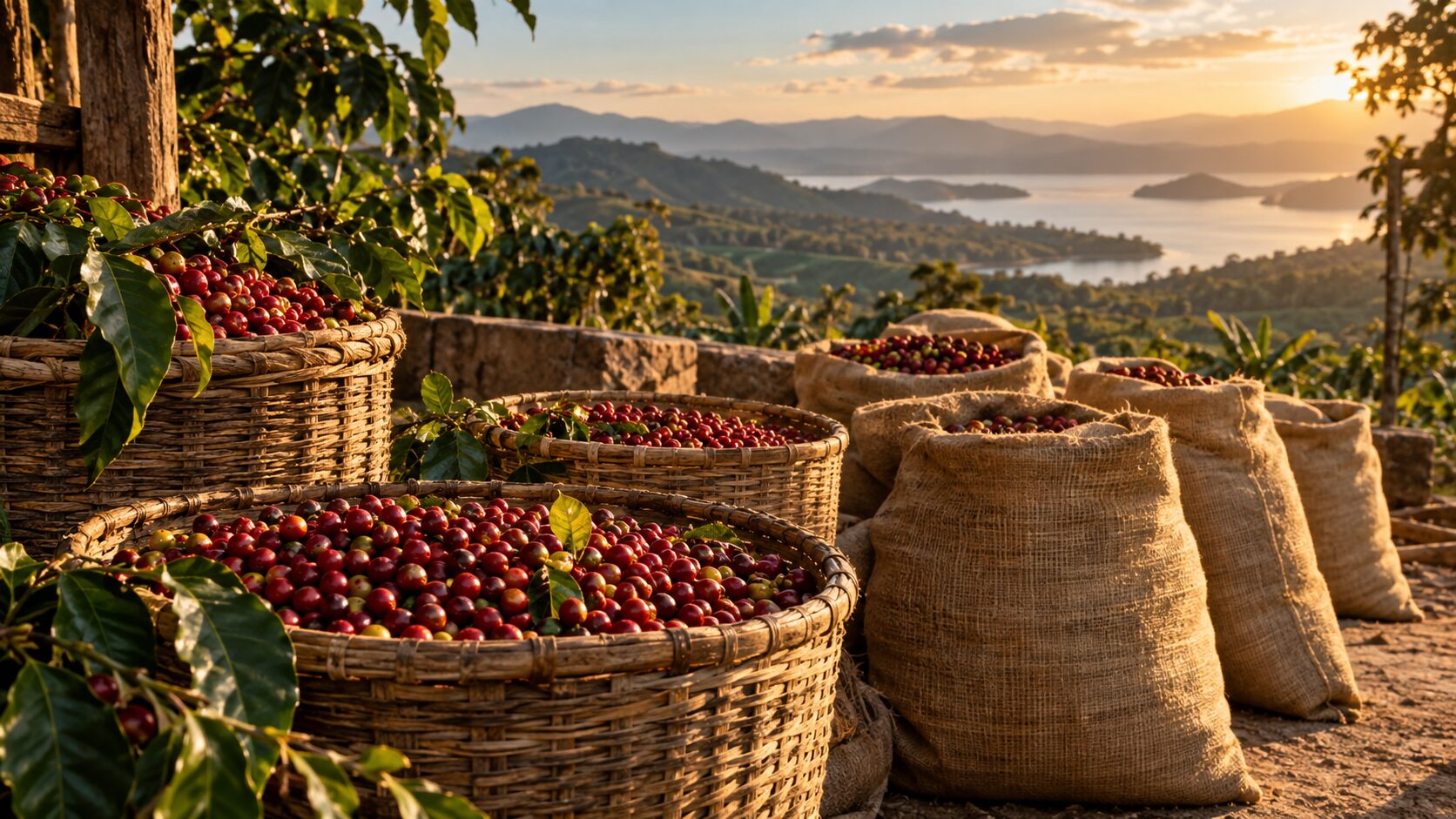
Once ripe cherries are picked, growers remove or dry the fruit around the seeds. The method chosen shapes sweetness, body, clarity, and the character that eventually reaches your cup.
See the difference
The photo shows three ways producers manage the juicy fruit around the seed. What stays on, what comes off, and how slowly it dries all affect the cup.
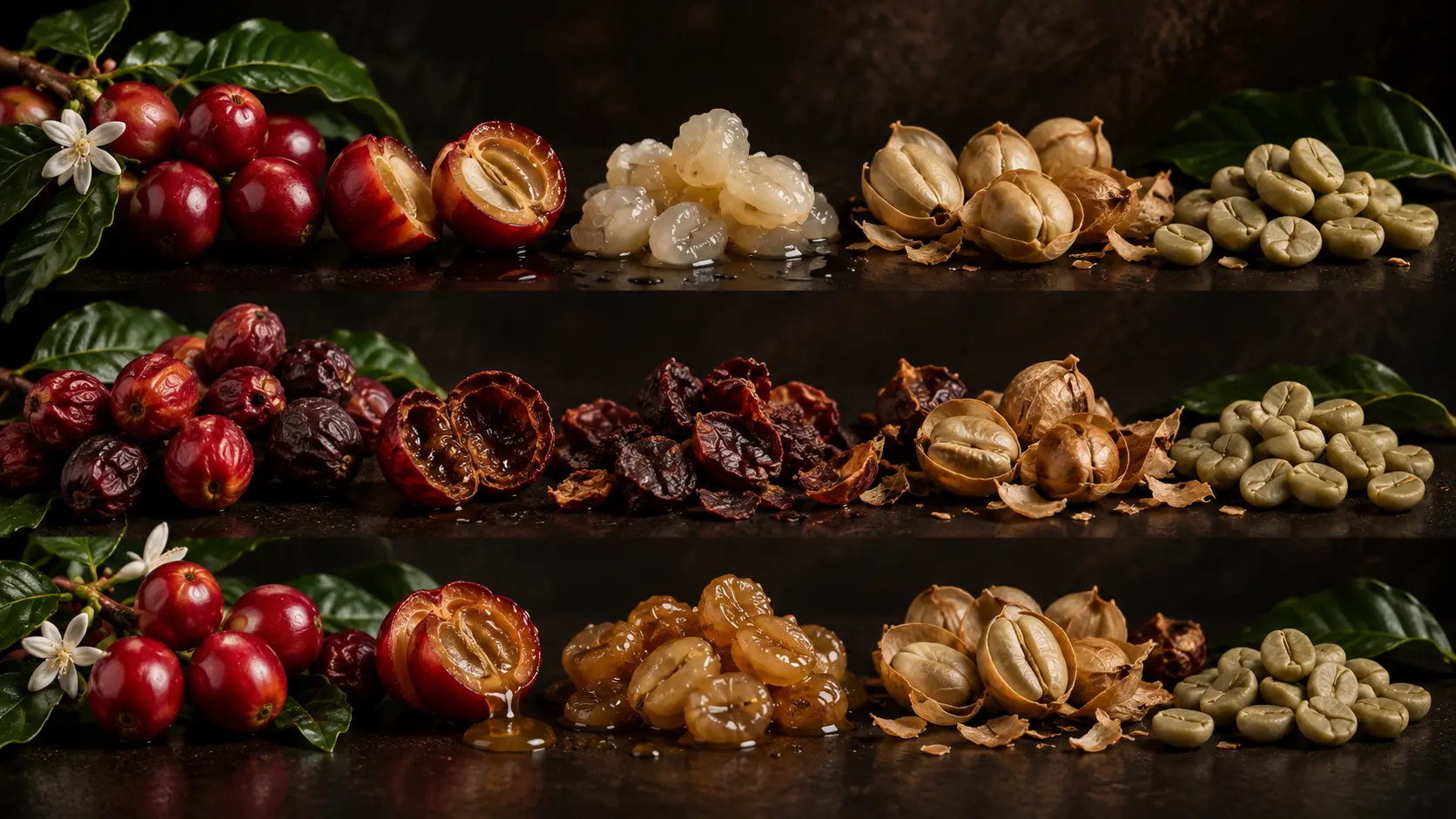
The skin, pulp, and mucilage are removed before drying. Fermentation and washing reveal a clean, crisp cup with bright acidity and clearly defined origin flavors.
The whole cherry dries around the seeds, so fruit sugars remain in contact longer. The result is often fuller-bodied, sweeter, and more fruit-forward.
The skin is removed while some sticky mucilage stays on during drying. This middle path can combine washed-coffee clarity with rounded sweetness and body.
The skin and pulp are removed before the beans are fermented, washed clean, and dried. Washed coffees often feel crisp and clear, allowing bright origin flavors to shine.
Whole cherries dry with the fruit still surrounding the seeds. Careful turning prevents spoilage and often produces a fruit-forward cup with fuller body and sweetness.
Some mucilage remains on the seed while it dries. This middle path can combine the clarity of washed coffee with the sweetness and body associated with natural processing.
Processing does not add flavor—it guides how the fruit's natural sugars and the seed develop together.