Outer skin / Exocarp
The ripe skin protects the fruit. When the skin and pulp are dried, they become cascara. Cascara syrup brings a deep brown-sugar and molasses-like sweetness to coffee.
 Let's Talk

Start with the fruit
Coffee With Krissy
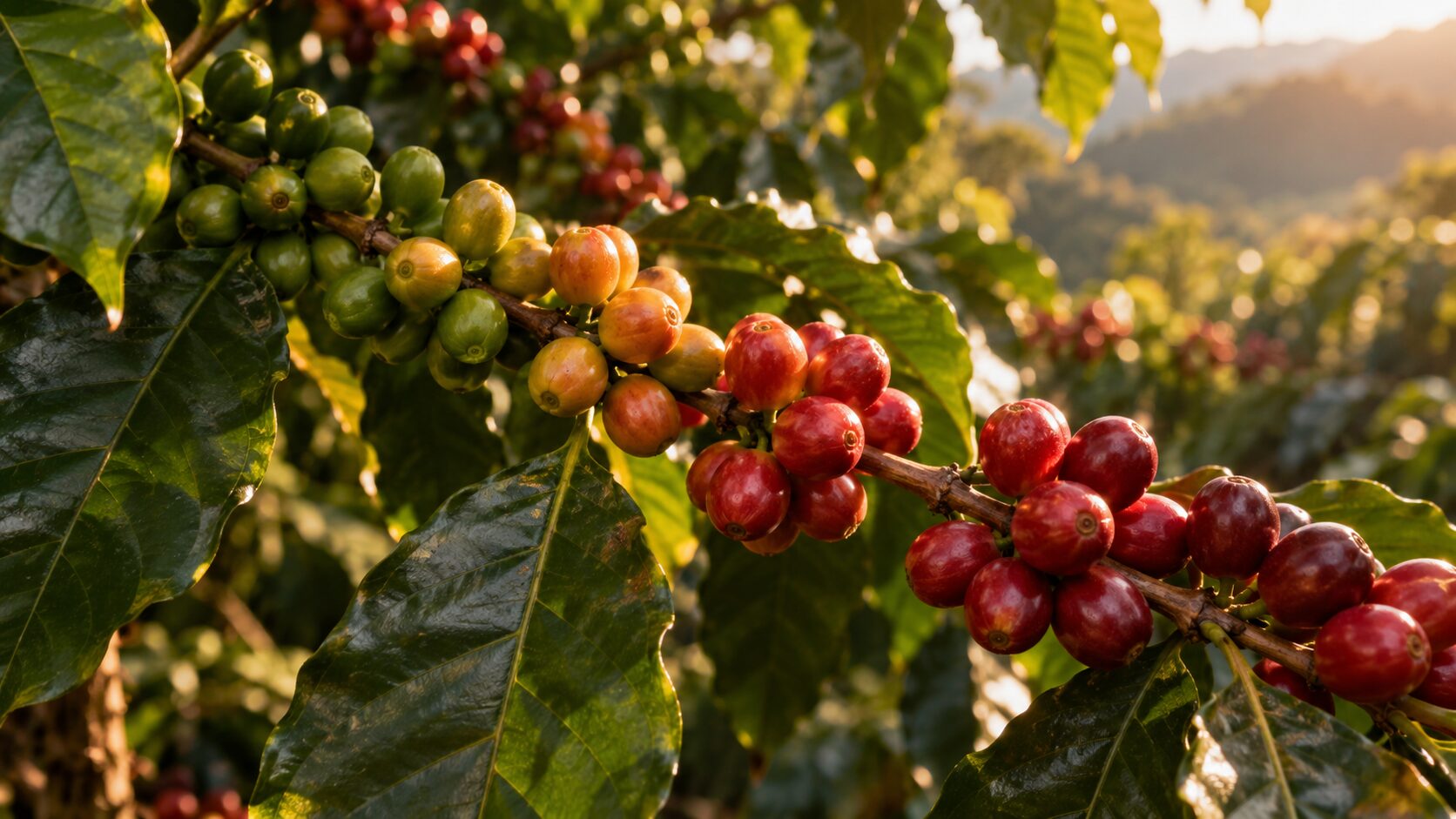
Coffee beans begin as seeds inside a sweet fruit. Each layer protects and nourishes those seeds before harvest, processing, roasting, and brewing reveal the coffee we recognize.
See the difference
Each layer protects the seeds and changes how sweetness, fruit character, and clarity develop during processing.
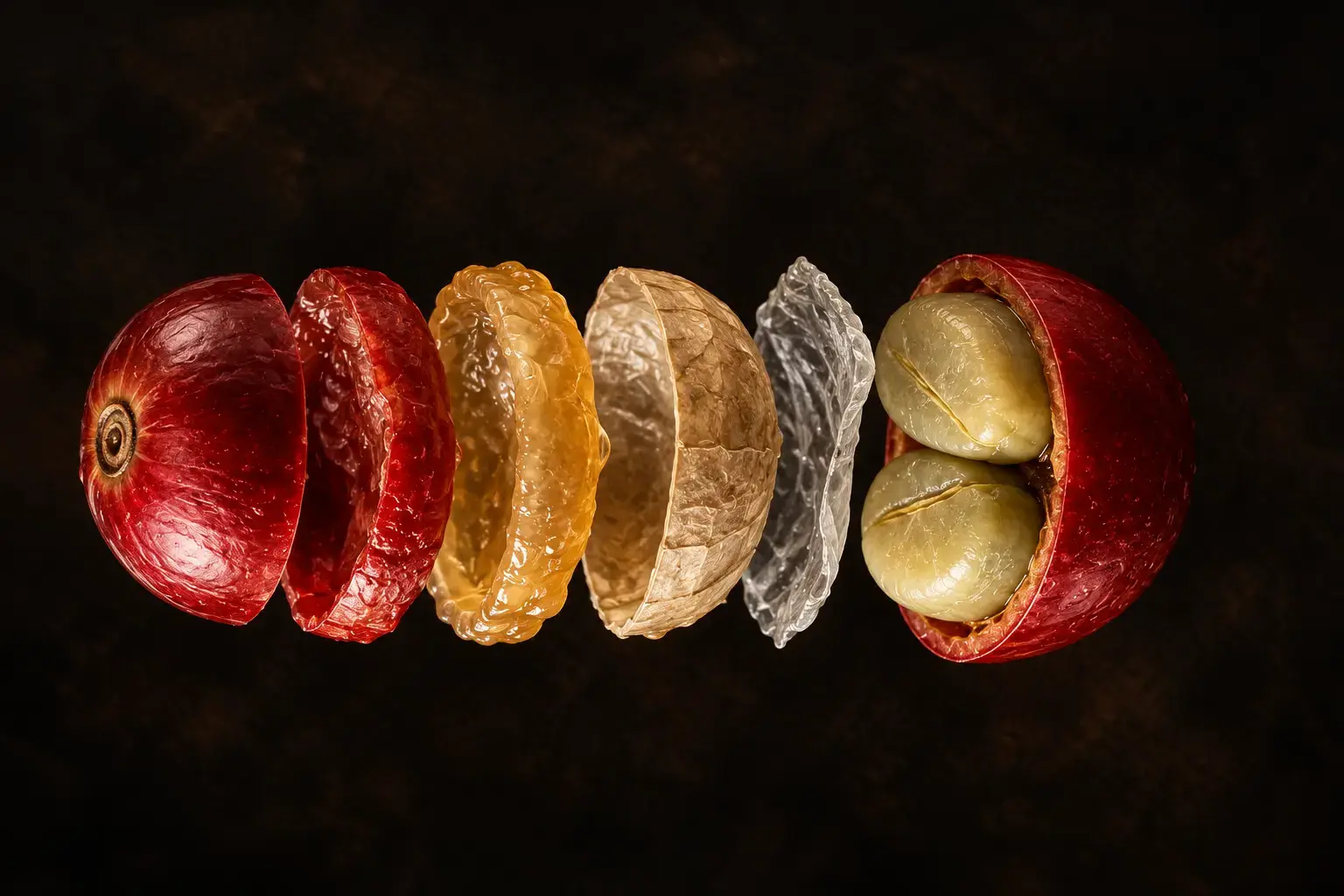
The ripe skin protects the fruit. When the skin and pulp are dried, they become cascara. Cascara syrup brings a deep brown-sugar and molasses-like sweetness to coffee.
The soft, sweet fruit feeds the developing seeds. Leaving it on during drying encourages fuller body, ripe-fruit notes, and natural sweetness.
This sticky, sugar-rich layer clings to the seeds. Keeping more of it can build sweetness and body; washing it away tends to create a cleaner, brighter cup.
A papery shell protects each seed while it dries. It is removed before export and roasting, so it protects quality more than it contributes flavor.
This whisper-thin membrane hugs the seed and mostly flakes away as chaff during roasting. Small traces may remain, but it contributes little direct flavor.
These pale green seeds become coffee beans. Their variety, growing conditions, processing, and roast create the flavors in the finished cup.
Inside the seed chamber
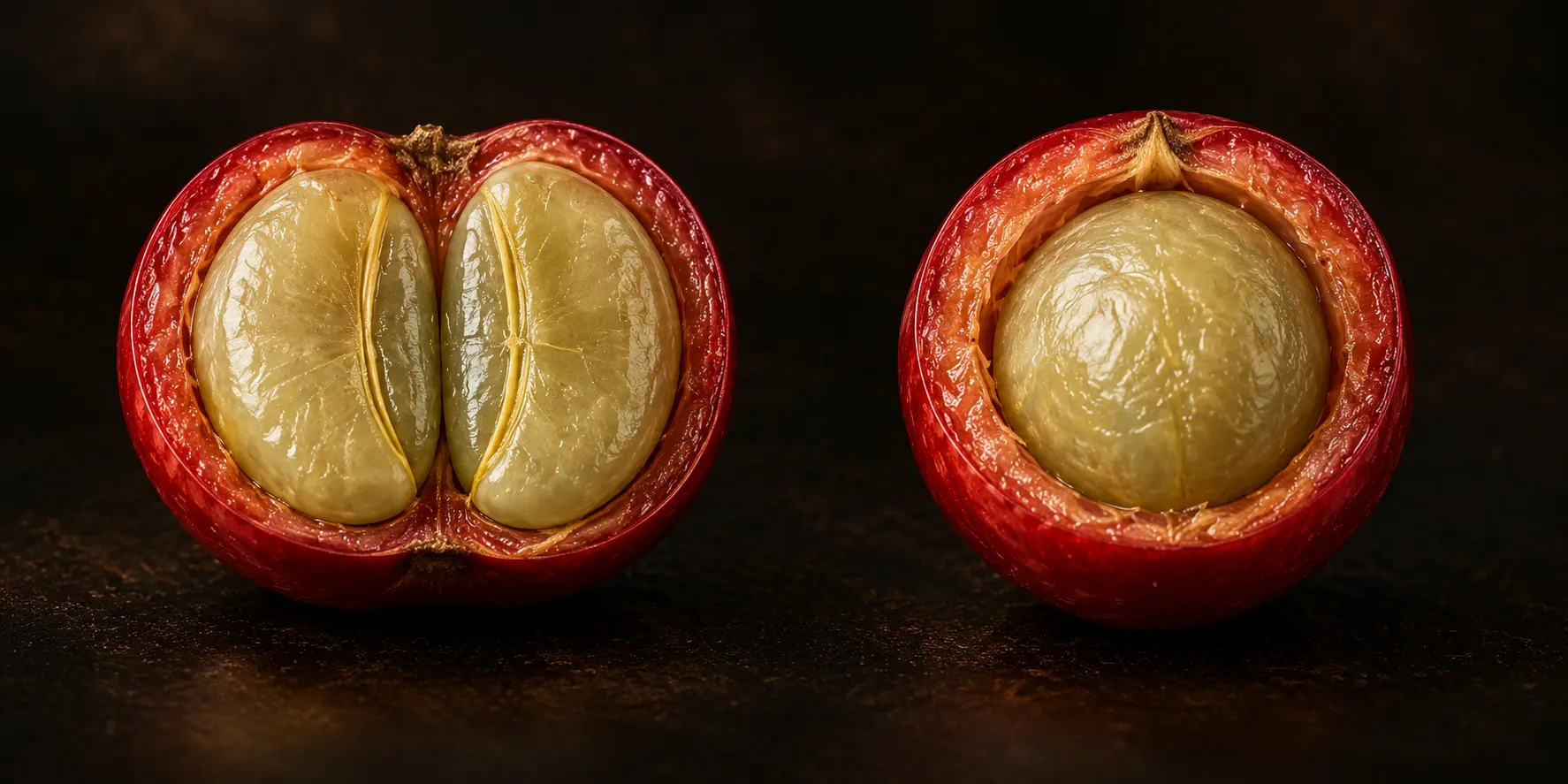
Most cherries grow two seeds pressed flat-side-to-flat-side, creating the familiar coffee-bean shape.
When only one seed develops, it grows rounder. This natural exception is called a peaberry.
The outer skin changes from green to red or yellow as the cherry ripens. Beneath it sit the sweet pulp and sticky mucilage, followed by parchment and a delicate silver skin wrapped around each seed.
Most coffee cherries develop two seeds. As they grow together, their facing sides flatten, creating the familiar coffee-bean shape. Those paired seeds make up the vast majority of the coffee we drink.
Occasionally, only one seed develops inside the cherry. With no second seed pressing against it, the bean grows smaller and rounder. This natural variation is called a peaberry; it is not a different coffee species, and its flavor still depends on origin, variety, processing, and roast.
Every bean begins inside a cherry—usually as one of a pair, and sometimes as a single peaberry.