White roast
Barely developed and extremely dense, with very high acidity and grain-like, nutty flavors. It is uncommon and difficult to grind or brew conventionally.
 Let's Talk

Find your flavor
Coffee With Krissy
Roast level is not a quality ranking. It describes how far the coffee travels through the roasting process and which qualities—origin, sweetness, body, or roast character—come forward most clearly.

See the difference
Roast level changes which flavors lead the cup. Lighter roasting highlights the bean's origin; darker roasting brings heat and development forward.
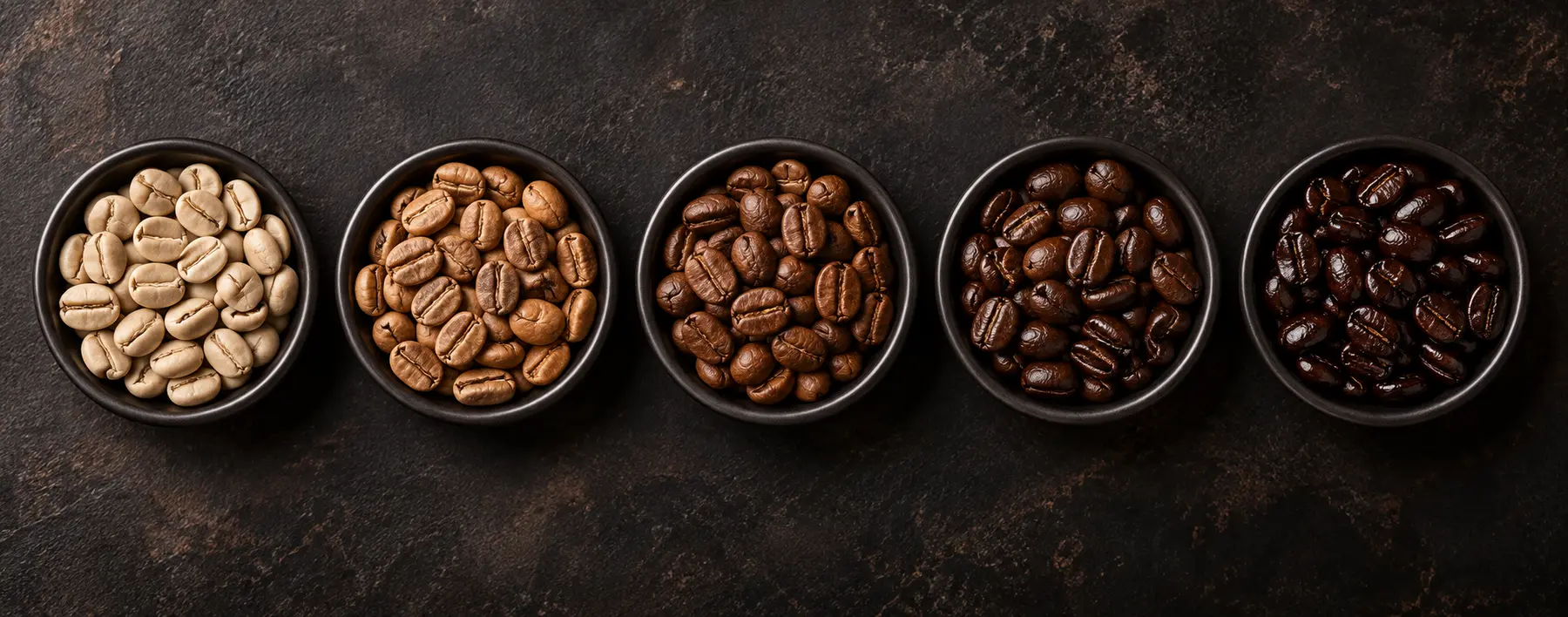
Barely developed and extremely dense, with very high acidity and grain-like, nutty flavors. It is uncommon and difficult to grind or brew conventionally.
Highlights floral, citrus, berry, and tea-like origin notes. The cup is brighter, lighter-bodied, and often preferred for pour-over.
Balances origin character with caramelized sweetness and body. It is versatile for drip coffee and many everyday brewing methods.
Longer development creates richer body, lower perceived acidity, and deeper caramel, nut, and chocolate notes. It works beautifully for espresso.
Roast character leads with bold body, bittersweet chocolate, smoke, and low perceived acidity. It suits people who want an intense, traditional cup.
Very lightly developed coffees preserve high acidity and delicate origin character. Expect bright, floral, tea-like, fruity, or citrus notes and a lighter body.
More development builds sweetness and body. Medium roasts often feel balanced and caramel-like; medium-dark roasts lean richer, deeper, and more chocolate-forward.
Longer roasting emphasizes bold body, bittersweet chocolate, smoke, and roast character. The flavors of the roast become more prominent than the coffee's delicate origin notes.
The best roast is the one that suits the coffee—and the flavors you love to drink.