Green bean
The raw seed holds moisture and the building blocks for flavor, but tastes grassy and cereal-like before roasting.
 Let's Talk

Inside the roaster
Coffee With Krissy
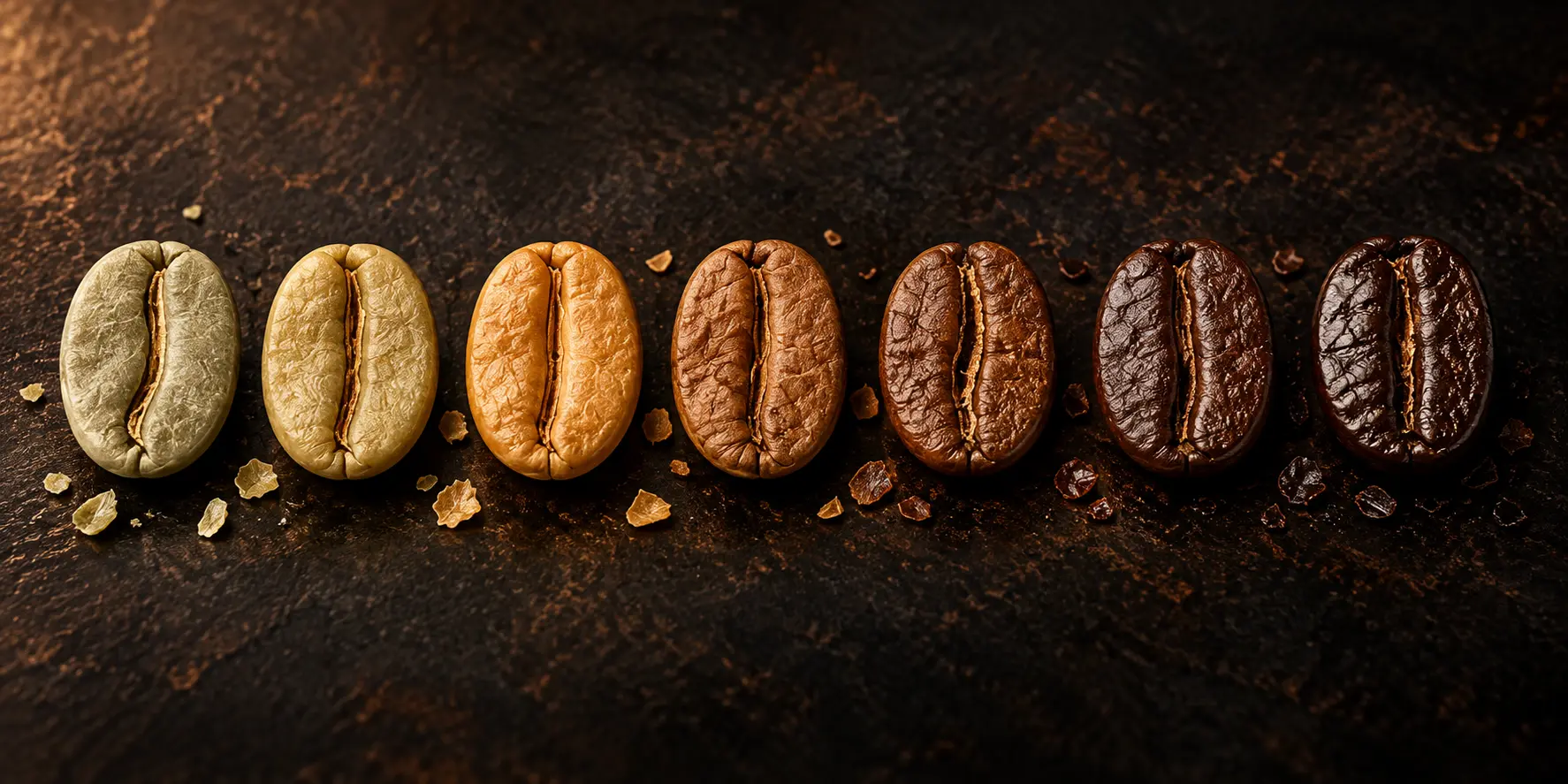
Roasting uses carefully controlled heat to transform green coffee. Moisture leaves, sugars brown, aromas develop, and the bean expands as the roaster balances origin character with roast expression.

See the difference
Green coffee is dense, grassy, and not ready to brew. Controlled heat unlocks aroma, sweetness, body, and the familiar flavor of coffee.
The raw seed holds moisture and the building blocks for flavor, but tastes grassy and cereal-like before roasting.
Heat drives out moisture so the bean can roast evenly. Rushing this stage can scorch the outside while leaving the center underdeveloped.
The bean turns straw-yellow, steam escapes, and grassy aromas soften. This prepares the seed for browning reactions.
Sugars and amino acids react through caramelization and the Maillard reaction, creating hundreds of aroma and flavor compounds.
Steam and gases make the bean expand and crack audibly. Acidity is still lively while sweetness and recognizable roast flavors begin to balance.
Time after first crack shapes the cup. Less development preserves brightness; more deepens sweetness, body, chocolate, and roast character.
Cooling stops the roast at the intended flavor point. The final color reflects a flavor choice, not a quality score.
Green coffee first releases moisture. Its grassy aroma softens, and the bean shifts toward yellow as heat moves steadily through it.
Sugars and amino acids react, building color and aroma. Pressure inside the bean creates an audible first crack as it expands and becomes more porous.
The final moments shape sweetness, acidity, body, and roast character. Small changes in time and temperature can create a noticeably different cup.
A roast profile is a deliberate balance of heat, time, and the character already present in the green coffee.