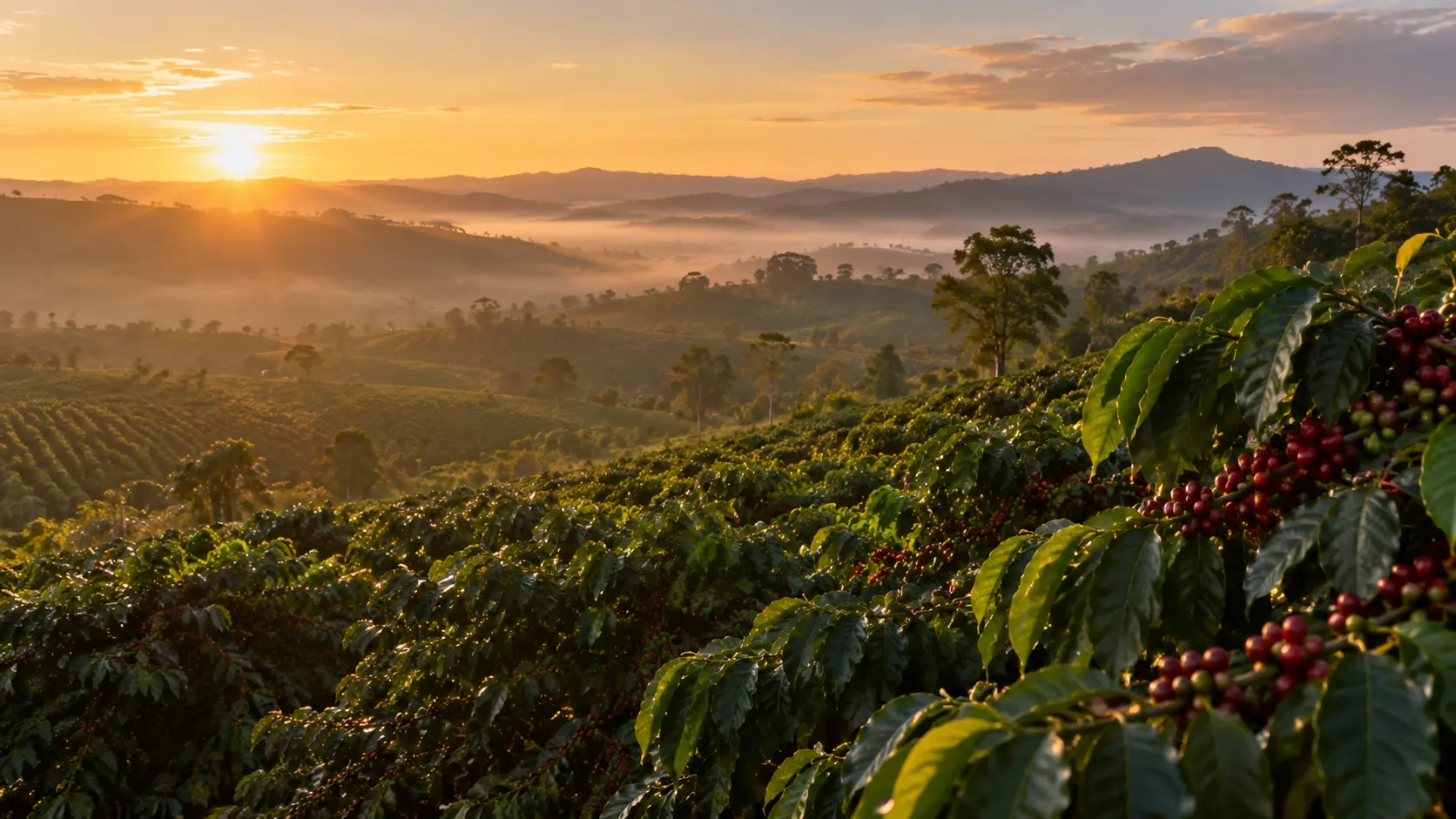
Altitude changes time
Higher or cooler sites generally slow cherry maturation, allowing sugars and aromatic compounds more time to develop. Warmer sites often bring fuller body and softer acidity.
 Let's Talk
Why this place matters
Đắk Nông belongs to the larger story of Vietnam coffee. Warm elevations, volcanic basalt soils, and a pronounced rainy season make Vietnam exceptionally suited to robusta. Đắk Lắk, Lâm Đồng, Gia Lai, and neighboring highland provinces form the engine of the country’s coffee production. Local elevation, temperature, rainfall, terrain, and farm practice can make this place distinctive even within the same country.
Much robusta is dry processed and sun-dried, while mechanical drying helps during humid weather. Washed and honey methods are increasingly used by specialty producers seeking cleaner, sweeter fine-robusta profiles. Producers adapt picking and processing to local conditions, shaping sweetness, aroma, acidity, and body. A coffee drinker should care because the name Đắk Nông offers a more precise sense of place than country alone.
Higher or cooler sites generally slow cherry maturation, allowing sugars and aromatic compounds more time to develop. Warmer sites often bring fuller body and softer acidity.
Selective picking, fermentation, drying, sorting, and storage determine whether the character of the place arrives cleanly in the cup.
Knowing the region helps you compare coffees thoughtfully and find the balance of sweetness, brightness, aroma, and body you enjoy.